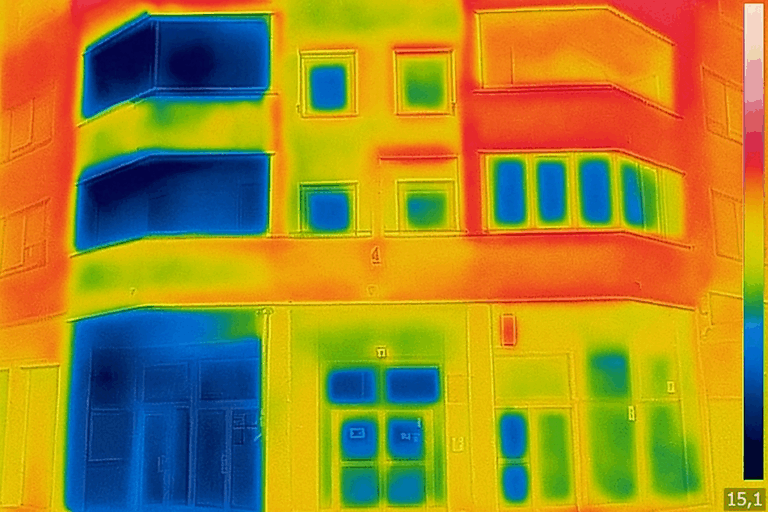
For many years, when the subject of thermal insulation was discussed, the focus was almost exclusively on winter performance. The aim was simple: to limit heat loss and reduce heating consumption.
Today, however, the situation has changed.
Summers are getting longer and longer, characterised by high temperatures and increasingly frequent heatwaves. Consequently, a truly efficient building can no longer be designed with winter alone in mind: it must ensure comfortable living conditions and minimise energy consumption throughout the year.
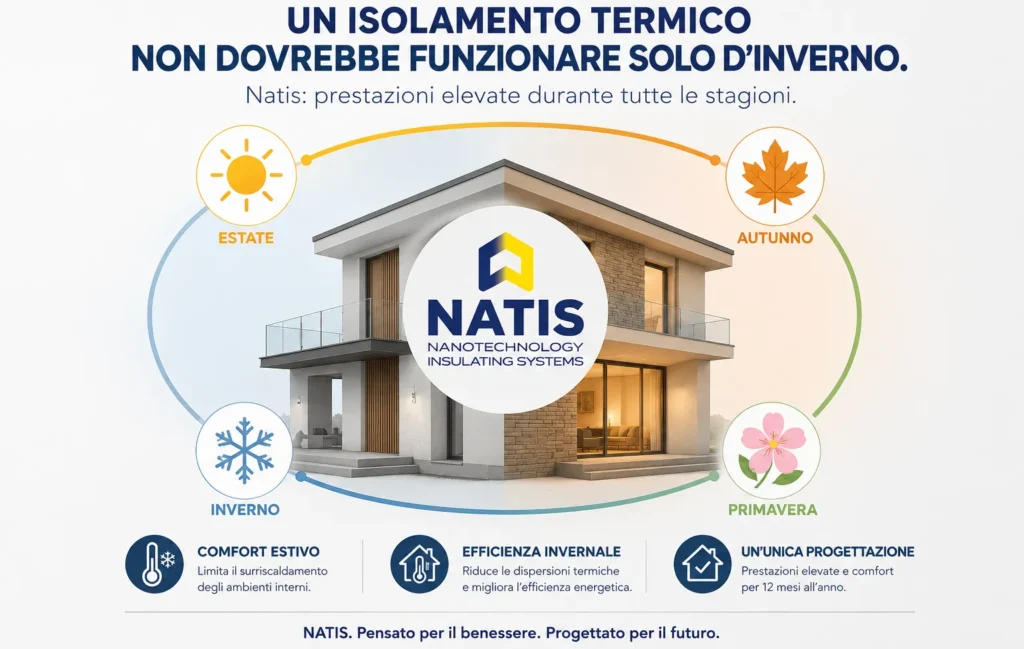
Summer comfort has become a key factor
Thermal transmittance remains an important indicator, but it is no longer sufficient to assess the effectiveness of an insulation system.
During the summer months, in fact, the external surfaces of buildings absorb a considerable amount of solar energy. If the building envelope is unable to effectively limit heat transfer, this heat will eventually reach the interior spaces during the evening and night-time hours, when natural cooling should instead be encouraged.
The result is well known:
- a rise in the internal temperature;
- increased use of air-conditioning systems;
- increase in energy consumption;
- a reduction in living comfort.
For this reason, the dynamic behaviour of the building envelope is playing an increasingly central role in design
The insulation must work in all seasons
A modern insulation system should not merely aim to reduce heat loss in winter.
The real challenge lies in controlling the flow of heat throughout the year, helping both to retain heat in winter and to limit its entry during the summer.
This approach makes it possible to achieve:
- more comfortable environments in every season;
- less reliance on air-conditioning systems;
- reduction in energy consumption;
- greater overall efficiency of the building.
The Natis solution: low-thickness nanotechnology insulation
In response to the new demands of building design, [name] has been launched Natis, the low-thickness nanotechnology insulation system developed to limit heat transfer through the building envelope throughout the year.
The aim is to improve the building’s energy performance without compromising the available space, whilst offering a solution suitable for both new builds and refurbishment projects.
Thanks to its technology, Natis helps to:
- to reduce heat loss in winter;
- to limit overheating in summer;
- to improve indoor comfort;
- reduce the operating time of air-conditioning systems;
- to improve the building’s overall energy efficiency.
Designing with the coming decades in mind
Climate change is forcing a shift in perspective within the construction sector as well.
Nowadays, designing insulation means looking beyond the simple U-value and assessing how a building actually performs under different climatic conditions.
In other words, an effective insulation system must not only work during the winter, but must also ensure comfort and high performance throughout the year.
Discover the solution best suited to your project
Every building has its own characteristics, constraints and objectives. For this reason, it is important to identify the insulation solution best suited to the design requirements and site conditions.
The Natis team is on hand to analyse each situation and recommend the most effective system for improving comfort and energy efficiency all year round.
Contact us for a personalised consultation and find out how Natis technology can help make your building more efficient, comfortable and sustainable.